International Pluridisciplinary Research Group
Semiotics of the Arts
The Group was established at the Catholic University of Lublin at the end of 2024/beginning of 2025 on the initiative of Professor Małgorzata Gamrat, and is open to motivated researchers interested in the intersection of the arts and semiotics.
In the Group you can meet any and every semiotician dealing with the various arts, and researchers from different areas of the arts who refer to semiotics in their academic works – renowned scholars, young researchers, doctoral candidates, as well as independent scholars from various continents, countries and generations.
The main goal of the research group is interdisciplinary arts research as broadly understood, regardless of its medium (word, sound, image, multimedia, etc.). The most important assumption is the joint work of researchers from different areas of the arts and semiotics, which allows us to look at selected issues from various perspectives, and which can be translated into the development of new research tools through the exchange of experiences. It is also a tool for the integration of researchers working in isolation on individual arts and a deeper understanding of the laws governing art, which, thanks to the tools developed based on semiotics, can be analysed and described together.
Description
Since the Renaissance, theorists and artists have considered in various treatises what connects and what divides the arts, as well as which of them appeal to reason and which move the emotions; these considerations intensified in the 18th century. In the 19th century, in turn, mainly artists (although theorists, too), continuing the considerations of those theorists of the previous century, wondered about those elements that unite the arts, their expressive possibilities, and their ability to affect the imagination. This reflection appears primarily in artistic works. Moreover, artists looked for common elements between the arts, tried to transfer techniques and structures between them, as well as seeking technical means that would allow for the same expressive effects; they co-operated and took up the same topics. All of this translated into enriching the artistic means of each of the arts and their closer co-operation. In the 20th century, the French philosopher Étienne Souriau proposed the creation of a new research discipline that would allow for the study of what unites the arts in their deepest layers. He called this field of research ‘comparative aesthetics’ (esthétique comparée). His ideas were only fully realised at the beginning of the 21st century when researchers from different areas of the arts and aesthetics began working together on a dictionary of aesthetics (Vocabulaire d’esthétique, 2010), in which individual entries were developed from the perspective of different arts. This work did not produce the expected results – fragments of individual entries remain side by side, separate. There was a lack of a common language and elements that would allow for comparisons and the emergence of an understanding between researchers.
Semiotics could be one such common language for research on the connections between the arts. The assumption that every language – including the artistic, not only the verbal – is a tool of communication (i.e. Jakobson), and, consequently, a medium of expression of artists’ sensitivity and their way of perceiving the world, is fundamental for that research. The main semiotic categories – signs and codes – can be indicated in every art, which enables mutual understanding between researchers and indicates the laws governing art, regardless of the medium of communication used by the artists themselves (i.e. Lotman, Tarasti, Mieke Bal, Sebeok, Gorlée, Marais, Petrilli, Torop, Thibault). The validity of this approach has been confirmed by recent semiotic congresses (the World Congress of Semiotics), during which panels devoted to selected issues functioning in various arts enjoyed great interest, and interdisciplinary discussions led by the participants of these panels indicated the great need for such co-operation and the potential of multidisciplinary projects brought together by semiotics.
Our Team

Małgorzata Gamrat
Founder and director
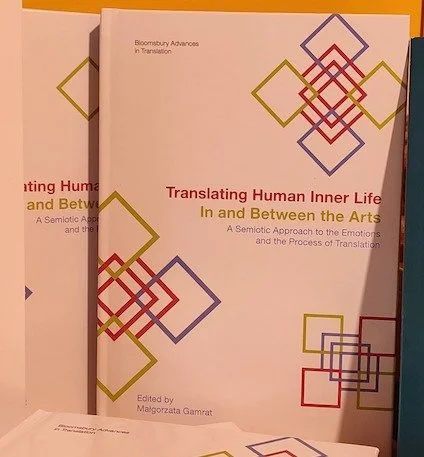
Małgorzata Gamrat is Professor at the John Paul II Catholic University of Lublin, Poland. The main fields of her academic interests include word-and-music studies, the interactions of music with other fields of art (especially literature), French and German culture of the nineteenth century, and the methodology of interdisciplinary research, including semiotics and intermedial translation. Her academic interests also include the oeuvres of Alexander Tansman, Vladimir Jankélévitch, Jean-Baptiste Rousseau, as well as classical and popular music of the twentieth century. Her most recently published books are Franz Liszt’s Songs for Voice and Piano. The Composer’s Approach to Poetry and Music (Brill 2023) and Translating Human Inner Life In and Between the Arts. A Semiotic Approach to the Emotions and the Process of Translation (Bloomsbury 2025); she was guest editor of Studia Semiotyczne (Between semiotics, music and signification, vol. 38(2) and Semiotics, Arts and Reality, vol. 38(1)), associate editor of the Roczniki Humanistyczne fascicle “Musicology”, and was elected Fellow of the International Communicology Institute, Washington, DC and Director of the International Pluridisciplinary Research Group “Semiotics of the Arts”.
Oana Andreica
Oana Andreica is Assistant Professor of Musicology and Musical Semiotics, head of the Doctoral Studies Council at the Gheorghe Dima National Academy of Music in Cluj-Napoca and director of the Centre for Research in Central and East European Music. She regularly participates in national and international conferences and her list of publications includes articles, interviews and concert reviews, as well as edited collective volumes, the most recent of which is Music as Cultural Heritage and Novelty, issued by Springer in September 2022. Her articles can be read in various journals, such as Contemporary Music Review, Studia Musicologica, Roczniki Humanistyczne, Musicology Today, Musicology Papers, etc. She published the monograph Artă şi abis. Cazul Mahler (Art and Abyss. The Case of Mahler) in 2012 and Ghid (incomplet) de concert [(Incomplete) Concert Guide] in 2021. Currently, her research focuses on topic theory and Romanian contemporary music.

Arthur Asa Berger
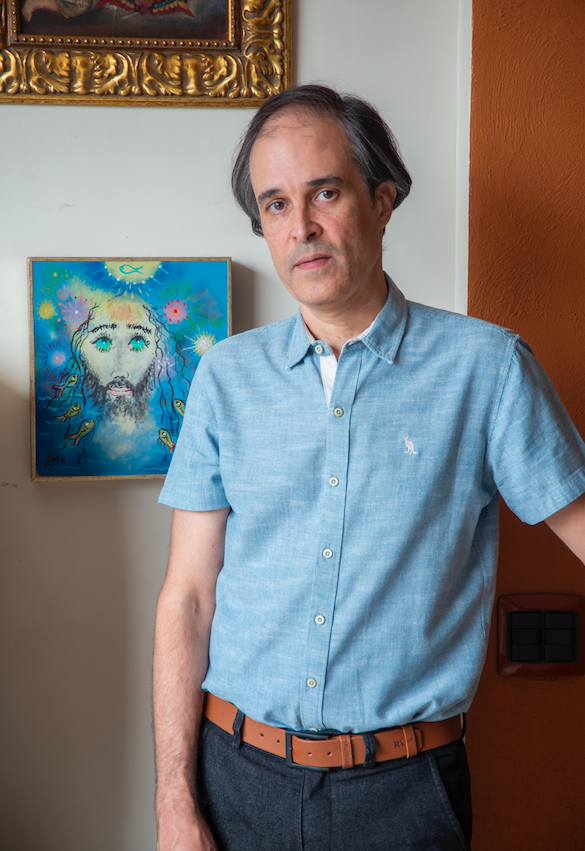
Professor Arthur Asa Berger is a renowned American scholar known for his extensive work in media and communication studies, as well as semiotics, sociology, cultural studies, popular culture, media theory, social networking, humour, tourism and everyday life. He has lectured as a guest professor or invited professor all over the world, including India, Argentina, China, Hong Kong, Turkey, Japan, Peru, Ukraine or Thailand. Arthur Asa Berger is currently Professor Emeritus of Broadcast and Electronic Communication Arts at San Francisco State University, where he taught from 1965–2003. Professor Berger's contribution to academia has been widely recognised, and his works have been cited extensively by scholars from around the world and translated into many languages, for example Italian, Chinese, Korean, Turkish, Persian, Spanish Italian, Russian, German, Swedish, Arabic and Indonesian. His highly impressive scientific output includes over 150 articles, numerous book reviews, and more than 100 books, including Pop Culture, 1973 (Pflaum), Popular Culture Genres, 1992 (SAGE), Media Analysis Techniques, 1982 (SAGE), Signs in Contemporary Culture, 1984 (Longman), Seeing is Believing: An Introduction to Visual Communication 1989 (Mayfield Pub Co), Media and Communication Research Methods 2000 (SAGE), Ads, Fads and Consumer Culture 2000 (Rowman & Littlefield), What Objects Mean: An Introduction to Material Culture 2009 (Left Coast Press), Smooth Sailing: Tourism and Ocean Cruising 2022 (Brill), Taste: Why You Like What You Like 2023 (Vernon), Sports Semiotics 2023 (Brill), and Shakespeare's The Comedy of Errors 2023 (Anthem).
Elżbieta Błotnicka-Mazur
Katolicki Uniwersytet Lubelski Jana Pawła II
Ivan Capeller
Ivan Capeller is Associate Professor at the School of Communications of the Federal University of Rio de Janeiro, Brasil (ECO/UFRJ). He is a production sound mixer for cinema and television and has written and published dozens of articles and reviews on the theory of cinema and sound studies, as well as the book O cinema e seu duplo, por uma semiótica dos dispositivos audiovisuais (2022).
Elżbieta Chrzanowska-Kluczewska
Jagiellonian University, Poland
Despina Gialatzi
Despina Gialatzi is a PhD candidate in European Historyatthe School of Early Childhood Education, in the Faculty of Education at the Aristotle University of Thessaloniki (AUT), Greece. She graduated from the School of French Language and Literature at AUT, where her PhD thesis was titled Historical and intersemiotic transformations in the work of Apuleius (124–170) and Jean de La Fontaine (1621–1695) and her Master’s was in French Literature and Interculturality, specialising in the comparative relationships between literature and the fine arts (her MA thesis title was Plume, pinceau où ciseau? Correspondances interartistiques du mythe de Psyché, 2013). She also has a Master’s in Semiotics, Culture, and Communication from AUT, specialising in semiotic narratology (her thesis title was An analysis of Perrault’s Le Maître Chat où Le Chat Botté illustrated by Doré,2021). She has also attended the Summer School of the Laboratory of Semiotics (SemioLab, AUT) in 2017, 2018, 2019, 2021 and 2023. She is a member of the Hellenic Semiotic Society, the Hellenic Folklore Society, the Hellenic Applied Linguistics Society, the Hellenic Translation Society, and the Association Internationale de Sémiotique / International Association for Semiotic Studies.
https://orcid.org/0009-0005-7085-7776
Clovis Salgado Gontijo
Prof. Clovis Salgado Gontijo (The Jesuit Faculty of Philosophy and Theology, Brazil), after completing his undergraduate studies (Faculdade Santa Marcelina) and a Master’s degree (Texas Christian University) in Music, shifted to Philosophy in order to devote himself to the field of Aesthetics. He earned a Bachelor’s degree in Philosophy from the Faculdade Jesuíta de Filosofia e Teologia (FAJE) and, with the support of the Chilean agency National Commission for Scientific and Technological Research (CONICYT), obtained a PhD in Philosophy with a specialisation in Aesthetics and the Theory of Art from the University of Chile, under the supervision of Andrés Claro.
From February 2016 to March 2025, he served as professor and researcher at the permanent faculty of the Graduate Program in Philosophy at FAJE, where he co-ordinated the research group “Mysticism and Aesthetics”. He is a member of the Susanne K. Langer Circle, an international group created in 2020 for the study and dissemination of the thoughts of the American philosopher Susanne K. Langer. As a fellow of the Fundação de Amparo à Pesquisa do Estado de Minas Gerais (FAPEMIG), he carried out, from September 2024 to May 2025, a postdoctoral research stay at the University of Salerno, under the supervision of Enrica Lisciani-Petrini and Daniela Calabrò. In November 2025, he was visiting professor at the University of Wrocław, at the invitation of Mariusz Turowski.
He is currently a collaborating researcher and postdoctoral fellow in the Department of Philosophy at the Federal University of ABC (UFABC), under the supervision of Fernando Costa Mattos, and a professor at the Seminário Provincial Sagrado Coração de Jesus in Diamantina.
He is the author of Ressonâncias noturnas: do indizível ao inefável (Loyola, 2017) and the translator of A música e o inefável (Perspectiva, 2018) by Vladimir Jankélévitch; Em algum lugar do inacabado (Perspectiva, 2021) by Jankélévitch and Béatrice Berlowitz; and Problemas da Arte (Quixote, 2026) by Susanne K. Langer. He has published extensively on Jankélévitch’s thoughts, including the production of the podcast 40 dias com Vladimir Jankélévitch (Spotify), which explores the philosopher’s contributions to the conception and lived experience of a non-religious spirituality. In addition to his academic work – focused primarily on the philosophy of music, nocturnal poetics, the theme of ineffability, and the intersections between philosophy and spirituality – he also seeks to apply his knowledge in artistic and cultural projects addressed to a broader public.
Eduardo Grillo
Eduardo Grillo is an independent researcher in semiotics who graduated in Semiotics and Symbolic Communication from the University of Siena (Italy). He has taught the semiotics of art at the Academies of Fine Arts in Naples and Bologna, and the philosophy of language and semiotics at the University of Perugia and LUMSA, in Rome and Palermo. His research focuses on media trends and products, including their relationship with digital technologies, as well as the relationship between semiotics and aesthetics. He is currently working on two volumes: one on the figure of the Lector Excerpens in relation to the contemporary media landscape, the second on the development of aesthetological approaches in European semiotics. Some of his works include Il compromesso dello sguardo. Cornelis Gijsbrechts e le ossessioni barocche [The Compromise of the Gaze. Cornelis Gijsbrechts and Baroque Obsessions], Perugia, Morlacchi Editore, 2016; Post-War Dream(s). L’informale e l’utopia della comunicazione [Post-War Dream(s). Informal Art and the Utopia of Communication], Perugia, Morlacchi Editore, 2016; and Semiotica. Storia, modelli, contesti [Semiotics. History, Models, Contexts], Rome, Carocci, 2014(with Andrea Bernardelli). He is the author of numerous chapters and articles published in the main semiotic academic journals such as “Garroni, the late Peirce and the Issue of Creativity” (with G.D. Guagnano) in Semiotica. Journal of the International Association for Semiotic Studies / Revue de l'Association Internationale de Sémiotique (2020, pp. 165–184); “Divenire zombi. Da Haiti a Romero, tra automodelli e traduzioni” [Becoming a zombie. From Haiti to Romero, between Self-models and Translations] (2025, pp. 56–74) and “Testi fatti a pezzi. Il culto mediale come ars excerpendi” [Texts in pieces. The media cult as ars excerpendi] (2020, pp. 16–32) in Ocula. Occhio semiotico sui media, and “Art as a Language Facing Reality” in Studia Semiotyczne 38(1) (2024, pp. 11–21, 2024). He was co-editor of thematic issues of Occhio semiotico sui media (2020, 2025) and Castelli di Yale (2024).

Jimena Bigá
Jimena Bigá is a fully funded PhD researcher in Indigenous Studies at the University of Helsinki, supported by the Kone Foundation. She is an Associated Researcher at the Centre of Excellence in Multibeing Justice in Indigenous Societies and currently a Marie Skłodowska-Curie Fellow in the EDGES project (Entangling Indigenous Knowledges in Universities), funded by the European Commission. She holds a Master’s degree in Archaeology and Cultural Heritage, specialising in Indigenous and decolonising archaeologies, with an academic background in semiotics, Latin American studies, and sociocultural anthropology. Her community-based research is carried out in close collaboration with the Tuxá Indigenous people of Rodelas, in Northeastern Brazil, particularly with Tuxá youth. Her collaborative work centres on multispecies heritage, encompassing Indigenous-led land-based pedagogies, Indigenous methodologies, body–territory approaches, more-than-human ethics, and ethico-onto-epistemological pluralism and justice. She further explores questions related to time and multi-temporalities, and the epistemic multimodality in the Brazilian Northeast.
Apart from academia, she collaborates on archaeological repatriation, territorial demarcation, and the revitalisation of the Dzubukuá language. In 2024, she was a visiting researcher in Argentina and Bolivia. Her recent publications include “The Toré and its Elements in Tuxá Indigenous Context: Translating Inner World through Performative ‘Art’ in Brazilian Northeast” and “Land-Based Education and Tuxá Cultural Resilience in the Opará River, Brazil”.
Miloud Boukhenoune
Dr. Miloud Boukhenoune is Associate Professor of Media and Communication Sciences at the Department of Media and Communication Sciences, Faculty of Humanities, University of Oran 1 (Algeria) and the head of the research group “Semiotics, Intercultural Communication and New Medias”, affiliated to the Sigma Laboratory at the University of Oran 1. He earned his PhD in the Humanities and Communication from the University of Algiers 3. His main interest areas are the semiotics of communication, the semiotics of culture, the semiotics of tourism, intercultural communication, and new media, as well as the relationship between intercultural communication and cultural adaptation. He has published papers on the symbolism of monuments in the construction of local identities, as well as on social media and everyday life. Currently, he is working on semiotic approaches dealing with questions of art and cultural identity in everyday life.
Paulo Chagas
University of California, Riverside, USA
Samaneh Eshraghi Ivari
Samaneh Eshraghi Ivari (b. 1984) is a semiotic researcher and architect specialising in the intersection of culture, architecture and human perception. Her PhD thesis, entitled Culture Sustainability and Architecture Semiotics, examines how cultural signs connect architectural symbols with human understanding. With teaching experience at the Near East University (Nicosia, Northern Cyprus) and presentations at international conferences, her work focuses on architectural semiotics, cultural heritage, and socio-political transformations in Iran. Samaneh is committed to exploring how semiotics shapes urban identity and cultural heritage in dynamic contexts. She received the Association Internationale de Sémiotique / International Association for Semiotic Studies scholarships for the 16th World Congress of Semiotics (Warsaw 2024).
Anna Głowa
The John Paul II Catholic University of Lublin, Poland
Małgorzata Grajter
Małgorzata Grajter is Assistant Professor and Head of Department of Music Theory at the Grażyna and Kiejstut Bacewicz University of Music in Łódź, Poland. She has also collaborated as a guest researcher with the Faculty of Philology of the University of Łódź. Her research interests are centred around the music of Ludwig van Beethoven, the relationships between word and music, translation studies, Portuguese music, and popular music culture. She is the author of the books Das Wort-Ton-Verhältnis im Werk von Ludwig van Beethoven (2019) and Applying Translation Theory to Musicological Research (2024).
Agata Handley
Agata Handley (Dr) is Assistant Professor in the Department of British Literature and Culture, the University of Łódź. Her main areas of academic interest are contemporary British poetry and transmedial studies. Her current research includes ekphrasis in Anglophone literature and visual art. She is the author of Constructing Identity in the Poetry of Tony Harrison (2021), and Editor-in-Chief of Text Matters: A Journal of Literature, Theory and Culture. Currently, she is Visiting Fellow at the Institute of Languages, Cultures and Societies at the University of London.
Her recent publications include “‘From Flesh into Marble’: Translating Grief Between Media in Tony Harrison's Film-Poem” in Translating Human Inner Life In and Between the Arts: A Semiotic Approach to the Emotions and the Process of Translation, Gamrat Małgorzata (ed.), Studies in Translation (series), Bloomsbury 2025, pp. 189–214; “Indispensable Rhythm: Scott Fitzgerald’s Poetic Entanglements” in The Bloomsbury Handbook to F. Scott Fitzgerald, Rattray Laura, Wagner-Martin Linda (eds.), Bloomsbury, 2025; “Reframing the Viewer’s Gaze. Ekphrastic Reconfigurations in Beyoncé and Jay Z’s APESHIT (2018),” in Music Video and Transcultural Imaginaries: Media – Aesthetics – Social Utopia, Dreckmann Kathrin, Jost Christofer, Schramm Bastian (eds.), Populäre Kultur und Musik (series), vol. 44, Waxmann 2025, pp.283–302; and Aesthetic Amalgams and Political Pursuits: Intertextuality in Music Videos, Dobrogoszcz Tomasz, Handley Agata, Fisiak Tomasz (eds.), New Approaches to Sound, Music, and Media (series), Bloomsbury 2024.
Our activities
Recent Publications
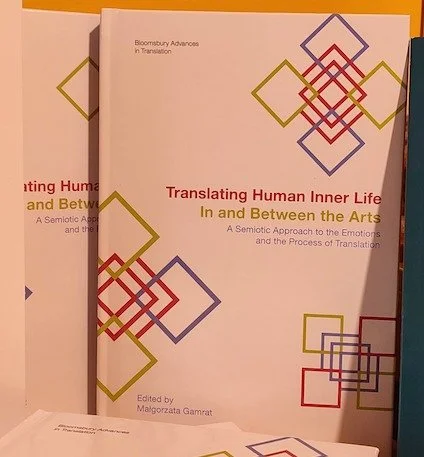
Translating Human Inner Life In and Between the Arts. A Semiotic Approach to the Emotions and the Process of Translation, ed. Małgorzata Gamrat, Bloomsbury 2025
Thematic issues of “Studia Semiotyczne” (guest editor Małgorzata Gamrat)
38(1) Semiotics, Arts, and Reality
38(2) Between semiotics, music and signification
Workshops, seminars, conferences, interdisciplinary collective and individual publications
The first meeting was held on Monday, 19 January 2026 via Zoom.
Workshops 2026 (via Zoom, at 10:00 Warsaw time):
May 9 (Saturday) Arts, Semiotics and Reality(ies) Part 1
May 23 (Saturday) Arts, Semiotics and Reality(ies) Part 2
June 13 (Saturday) Arts, Semiotics and Emotions/ Feelings / Sentiments / Inner Life, etc.
June 27 (Saturday) Arts, Semiotics and Communication
Contact: malgorzata.gamrat@kul.pl